SPARKan AI research fellowship for ambitious university students and professionals

SPARK (Student Programme for AI Research and Knowledge) is a fully remote AI research programme for university students and working professionals. The flagship Fellowship is a part-time, eight-week project in a team of 2–4 with PhD mentors from universities including Cambridge and Imperial, and researchers from labs such as Google DeepMind, Amazon, and Meta. Teams produce a paper prepared for submission to a top AI conference, building a portfolio that strengthens PhD, research-internship, and career-transition applications. Insights are short programmes that teach core AI research skills, from a weekend taster to a three-week deep dive.

In their words

What our students say

  • SPARK Insights was very comprehensive. I’m leaving the programme with new skills, greater confidence, and excitement for what comes next.
    KennedyGhana
  • This course gave me insight into how to study research papers and conduct experiments independently. It also taught me the fundamentals of AI, from the mathematics behind models to how they reason and where they can be vulnerable.
    KaranUnited Kingdom
  • The programme was extremely enriching. The lectures were comprehensive, every class felt productive, and the mentors supported us throughout the process.
    SiddiqaPakistan
  • What I liked most was the structure of the programme. The mentors first explained the theory clearly, then we applied what we learned in workshops. This made complex topics much easier to understand.
    IzabellaKyrgyzstan

Who this is for

For ambitious university students and professionals who want to do real research

We welcome university students and working professionals curious about AI, mathematics, computer science, or research, whether you want an eight-week Fellowship that ends in a paper, or a short Insights programme to get started.

Programmes

Choose a programme format

Fellowships are eight-week research projects that produce a paper. Insights are short programmes, from a weekend workshop to a three-week deep dive, focused on AI research skills.

Short, fully remote programmes that teach core AI research skills through hands-on, practical work: reading papers, framing questions, writing and running code, training and evaluating LLMs, and running your own experiments to make sense of the results. Choose a two-day weekend taster, a one-week intensive, or a three-week deep dive.

Insights · Weekend

£150 per student

A two-day taster of AI research methodology

  • Duration: 2 days (Saturday + Sunday), fully remote
  • Schedule: Next: Saturday 24 – Sunday 25 October 2026. See the schedule below for later start dates.
  • Format: Live lectures, hands-on exercises, and a guided activity
  • Mentor access: Group sessions with PhD researchers
  • Outcome: A clearer picture of how AI research works in practice

Apply for this package

Insights · 1 Week

£200 per student

A focused first taste of AI research methodology

  • Duration: 1 week, fully remote
  • Schedule: Next: Monday 26 – Friday 30 October 2026. See the schedule below for later start dates.
  • Format: Daily lectures and live workshops
  • Mentor access: Group sessions with PhD researchers
  • What you learn: Framing research questions and reading papers, then getting hands-on: writing and running code to carry out your first experiments
  • Outcome: Foundational research skills you can apply right away
Apply for this package
Best for depth

Insights · 3 Weeks

£500 per student

A deeper hands-on dive into AI research skills

  • Duration: 3 weeks, fully remote
  • Schedule: Next: Monday 26 October – Friday 13 November 2026. See the schedule below for later start dates.
  • Format: Lectures, workshops, and a guided mini-project
  • Mentor access: Small-group mentoring with PhD researchers
  • What you learn: Reading papers, then hands-on work writing code, training and evaluating LLMs, and designing and running your own experiments to communicate real results
  • Outcome: A short research write-up and a working AI research toolkit
Apply for this package

Insights cohorts

Insights programmes run on a rolling basis throughout the year, so you can choose a start date that fits around your studies or work.

  1. ApplyApplications open until 19 October 2026
  2. DecisionDecisions issued within a few days of applying
  3. Programme datesWeekend WorkshopSaturday 24 – Sunday 25 October 20261-WeekMonday 26 – Friday 30 October 20263-WeekMonday 26 October – Friday 13 November 2026

Applications close roughly one week before each cohort starts. Questions? Email [email protected].

Apply with a short application, reviewed by our team.

Some of our mentors

Guided by researchers who work at the frontier

PhD researchers and scientists from top universities and industry labs. Many also advise on competitive PhD admissions, research internships, and moving into research roles.

Ivaxi Sheth

Ivaxi Sheth

CISPA · Imperial College London · Google DeepMind · Amazon

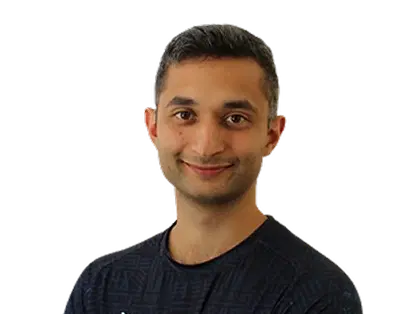
Machine learning at the interface of algorithms, systems, and trustworthy behaviour, connecting security-conscious evaluation and efficient learning with large-scale deployment in industry settings.

Vatsal Raina

Vatsal Raina

University of Cambridge · Meta

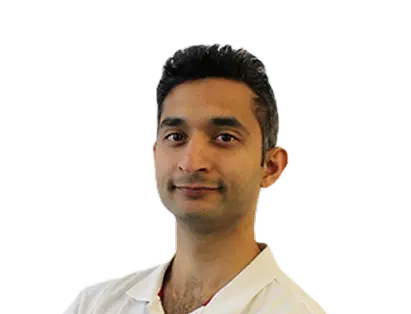
Natural language processing and generative models, with emphasis on retrieval-augmented text and efficient embeddings. PhD research in the Machine Intelligence Laboratory, Cambridge; industry research at Meta on scalable language technologies.

Vyas Raina

Vyas Raina

University of Cambridge · AWS AI lab

Adversarial robustness and reliability of large language models, including evaluation under stress and failure modes in deployment. PhD research in the Machine Intelligence Laboratory, Cambridge; applied NLP research at the AWS AI lab.

Students, professionals, universities, employers & partners

Get in touch

We welcome conversations with university students, working professionals, university careers services, employers, and organisations supporting promising researchers. Email or message us on WhatsApp to discuss options or organise a meeting.

FAQs

Common questions

About SPARK

Is SPARK fully remote?
Yes. Every SPARK programme (Fellowships and Insights) runs entirely online: live mentoring check-ins, lectures, and team collaboration are structured for remote participation across time zones where possible.
What is the difference between Fellowships and Insights?

Fellowships are eight-week, in-depth AI research projects in teams of 2–4. The goal is a paper-quality write-up prepared for submission to a top AI venue. They run multiple cohorts a year and require a serious weekly commitment (10–20 hours per week depending on tier), designed to fit around a degree or a full-time job.

Insights are short, fully remote one- or three-week programmes focused on AI research skills rather than producing a full project. They are a strong fit if you want a focused introduction to how AI research works before committing to a fellowship.

Who can apply?
Motivated university students (from any year of study) and working professionals who are curious about AI, mathematics, computer science, or research. Fellowship admission is selective and based on fit, preparation, and research potential, not a single test score; Insights admission is based on a short application.
Are bursaries or instalments available?
Scholarships are only available for the Fellowships. Contact us to discuss access support or payment options. We aim to admit strong candidates regardless of background where we can.
Is there a certificate of completion?
Yes.

Fellowships (8-week research projects)

When do Fellowship cohorts start?
We run multiple Fellowship cohorts a year, each starting on the first Monday of the month. The next intake begins on Monday 2 November 2026, followed by term-aligned cohorts on Monday 4 January 2027 and Monday 5 April 2027, and a summer cohort on Monday 5 July 2027. Each cohort follows the same eight-week structure.
What does a typical Fellowship week look like?
Each week combines a structured lecture, hands-on workshops, mentor-led sessions, and independent team work. You will spend additional time reading papers, implementing experiments, and iterating on your project. The full eight-week arc is described in the "How Fellowships work" expandable above.
How large are Fellowship teams?
Students work in small teams of 2–4. This ensures close mentorship while maintaining a collaborative research environment, similar to a small research group.
How much time per week should I plan for?
Foundation expects at least 10 hours per week, Core at least 15, and Intensive at least 20, plus scheduled live sessions. Many participants run a Fellowship alongside a degree or a full-time job by treating it like a serious commitment. See the Fellowship pricing tiers above for details.
Do Fellowship students publish their work?
The expectation is a submission of a paper to a top AI conference venue, given the participant’s commitment to their project. Our experienced team will create a supportive environment for paper publication, which can meaningfully strengthen PhD, research-internship, and career-transition applications.
What if I have exams, work deadlines, or a holiday during the Fellowship?
This is okay and can be discussed. Let us know upfront and be prepared to put in extra hours to catch up before or after the weeks you are away. Many of our participants fit Fellowships around term-time exams, work commitments, and holidays.
What if I don't have enough programming experience?
Don't worry: our pre-course material is designed to get you up to speed. You may need to put in a few extra hours. If you're still unsure, feel free to email us or message us on WhatsApp to schedule a call with a team member or ask questions.
What if I don't have enough mathematical experience?
Don't worry: our pre-course material is designed to get you up to speed. You may need to put in a few extra hours. If you're still unsure, feel free to email us or message us on WhatsApp to schedule a call with a team member or ask questions.

Insights (1- and 3-week programmes)

When do Insights cohorts start?
The next Insights cohort begins on Monday 26 October 2026, with the Weekend Workshop on 24–25 October 2026. Cohorts run on a rolling basis throughout the year, so you can pick one that fits around exams, work, vacations, or internships; see the Insights tab above for the full schedule of later start dates.
How are Insights different from Fellowships?
Insights are short and skills-focused: they teach you how AI research is done (reading papers, framing questions, designing and running small experiments, and communicating results), rather than producing a full eight-week project. They are ideal for a first taste of AI research, or as preparation before a Fellowship or a summer research internship.
How much time per week should I expect for Insights?
Insights are designed to be doable alongside a degree or a full-time job. Expect daily live lectures and workshops plus a few hours of independent reading and exercises each day during your chosen week. The 3-week format also includes a guided mini-project that culminates in a short write-up.
Do I get a mentor in Insights?
Yes, Insights are mentor-led. The 1-week format includes group sessions with PhD researchers; the 3-week format adds small-group mentoring and a guided mini-project.
Will I get a research paper out of Insights?
Insights are not designed to produce a full conference-style paper; that is what the Fellowships are for. The 3-week Insights format does culminate in a short research write-up that demonstrates the skills you have built and can be cited in PhD or internship applications.
Can I do Insights and then a Fellowship later?
Yes, and this is a common path. Many participants use Insights as a structured introduction before committing to a full eight-week SPARK Fellowship.

Mentors & PhD / internship support

How are mentors selected?

Mentors are PhD researchers and industry practitioners from top ranked academic institutions such as University of Cambridge and Imperial College London, as well as organisations like Google DeepMind, Amazon, and Meta.

In addition to research experience, many of our mentors have prior experience supporting students and professionals applying to competitive PhD programmes, research internships, and research roles at leading universities and industry labs. All mentors are selected for both their technical expertise and their ability to support and challenge participants effectively.

Do mentors provide support with PhD, internship, or research-role applications?
Within the Fellowships, the Core and Intensive tiers include structured guidance on academic CVs, research statements, and PhD, internship, or research-role interview preparation. This builds on mentors’ experience supporting students and professionals applying to PhD programmes and research labs at institutions including the University of Cambridge, University of Oxford, and beyond. Insights focus on research skills rather than applications support.

Apply

Ready to start?

Fellowship admission is selective. All programmes are fully remote and designed to run alongside your studies or a full-time job. See cohort start dates in Programmes.

Questions? [email protected] or WhatsApp us

Questions? Chat with us