SPARK — a selective AI research fellowship for ambitious school students

SPARK (Student Programme for AI Research and Knowledge) is a summer-long, fully remote AI research fellowship for secondary-school students. You join a small team with PhD mentors from universities including Cambridge and Imperial, alongside AI researchers at Amazon, Meta, and other leading labs. You will read papers, run experiments, and write up a full research project, with support aimed at publication-quality work where the results warrant it. Weekly mentoring sessions and weekly lectures on research skills give you structured support so you learn how research actually works.

Admissions

Summer 2026 timeline

  1. ApplyApplications close 1 June 2026
  2. InterviewShort interview for invited candidates in the first week of June
  3. DecisionHear back by 15 June 2026
  4. Programme startFellowship begins 1 July 2026

Who this is for

For motivated school students who want to do real research

We welcome secondary-school students who are curious about AI, mathematics, computer science, or research—and ready for a serious weekly commitment across the summer programme.

  • You want to move beyond courses and competitions into original inquiry
  • You are excited to read papers, debate ideas, and iterate on experiments
  • You can collaborate generously and contribute consistently to a team
  • You are prepared for feedback, ambiguity, and intellectual honesty

How the programme works

Weeks 0–8: onboarding through a submission-ready research paper

The fellowship runs fully online. Week 0 is onboarding, tooling, and team matching; Weeks 1–8 move from proposal to experiments, writing, and showcase. Higher packages include everything in the tiers below, plus more mentor access and application-oriented add-ons as shown in the table.

Week-by-week breakdown by package. All tiers use teams of 2–4 students.
WeekFoundation10 hrs/week min.Core15 hrs/week min.Intensive20 hrs/week min.
Week 0Onboarding, tooling, research primer, team + mentor matchingEverything in Foundation + extra setup support, planning guidance, early applications-oriented orientationEverything in Core + more hands-on onboarding, early individual goal-setting, broader orientation support
Week 1Project brainstorming, mentor meetings, proposal writing, codebase setupEverything in Foundation + extra mentor support between meetings and written proposal commentsEverything in Core + more mentor access during scoping and extra support refining the research plan
Week 2Literature review, experiment planning, baselines/metrics, first sanity-check experimentEverything in Foundation + written literature feedback and extra paper-reading supportEverything in Core + more mentor access on methodology and additional framing support
Week 3Core implementation, pilot experiments, methodology draftingEverything in Foundation + more support on technical blockers, reproducibility, and progress trackingEverything in Core + more check-ins during implementation and extra debugging support
Week 4Main experiments begin, midpoint review, early figures/tablesEverything in Foundation + formal midpoint check-in and extra support reviewing early findingsEverything in Core + more detailed midpoint review and optional short progress presentation feedback
Week 5Results analysis, ablations, results draftingEverything in Foundation + CV workshop/reviewEverything in Core + CV support plus personal academic profile guidance and support articulating individual contribution
Week 6Full paper draft assembly and paper-writing supportEverything in Foundation + personal statement support, applications/interview guidance, entrance exam prep sessionEverything in Core + applications strategy support and additional mentor access during full-draft week
Week 7Revision, paper polishing, submission checklistEverything in Foundation + interview preparation sessionEverything in Core + mock interview session and presentation coaching
Week 8Final paper, showcase, submission readinessEverything in Foundation + final guidance on using the project in applicationsEverything in Core + portfolio / GitHub / project-page guidance and more personalized next-step support

Programme packages

Three intensity levels. One shared research standard.

Foundation

£2,000 per student

Best for a first serious research experience

  • Weekly commitment: 10 hrs/week minimum
  • Group size: 2–4 students
  • Mentor access: Core scheduled support
  • Research outcome: Final research paper and conference/workshop submission guidance
  • Built-in add-ons: Research-focused core programme
Request consideration
Most popular

Core

£3,500 per student

More mentor access plus applications support

  • Weekly commitment: 15 hrs/week minimum
  • Group size: 2–4 students
  • Mentor access: More mentor access between meetings
  • Research outcome: Final research paper with additional academic/application support
  • Built-in add-ons: CV, personal statement, interview guidance, entrance exam prep
Apply for this track

Intensive

£7,000 per student

Highest mentor access and fullest add-ons

  • Weekly commitment: 20 hrs/week minimum
  • Group size: 2–4 students
  • Mentor access: Highest mentor access
  • Research outcome: Final research paper with the broadest support and strongest programme add-ons
  • Built-in add-ons: Everything in Core, plus mock interviews, presentation coaching, portfolio/project-page support
Request consideration

Some of our mentors

Guided by researchers who work at the frontier

PhD researchers and scientists from top universities and industry labs—guiding school student teams remotely through weekly mentoring sessions alongside the programme's weekly lectures.

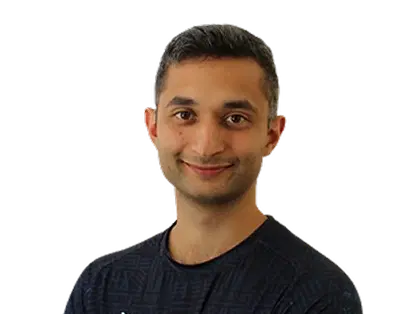
Ivaxi Sheth

Ivaxi Sheth

CISPA · Imperial College London · Amazon

Machine learning at the interface of algorithms, systems, and trustworthy behaviour— connecting security-conscious evaluation and efficient learning with large-scale deployment in industry settings.

Vatsal Raina

Vatsal Raina

University of Cambridge · Meta

Natural language processing and generative models, with emphasis on retrieval-augmented text and efficient embeddings. PhD research in the Machine Intelligence Laboratory, Cambridge; industry research at Meta on scalable language technologies.

Vyas Raina

Vyas Raina

University of Cambridge · Amazon

Adversarial robustness and reliability of large language models, including evaluation under stress and failure modes in deployment. PhD research in the Machine Intelligence Laboratory, Cambridge; applied NLP research at Amazon.

Schools, partners & counsellors

Partner with SPARK

We welcome conversations with schools, university outreach teams, counsellors, and organisations supporting talented students. Book a short consultation or email us—we typically keep an hour free most days for introductions and questions.

FAQs

Common questions

Is SPARK fully remote?

Yes. The summer fellowship runs entirely online: live mentoring check-ins, lectures, and team collaboration are structured for remote participation across time zones where possible.

Who can apply?

Motivated secondary-school students who are ready for a serious research workload. Admission is selective and based on fit, preparation, and maturity—not a single test score.

Do students publish their work?

Projects are developed toward paper-quality output. When the science merits it, teams may pursue workshop submissions, preprints, or other venues with mentor guidance—but publication is never guaranteed.

How much time should families plan for?

Foundation expects at least 10 hours per week, Core at least 15, and Intensive at least 20, plus scheduled live sessions. See the package cards for details.

Are bursaries or instalments available?

Contact us to discuss access support or payment options. We aim to admit strong candidates regardless of background where we can.

Apply

Ready to start?

Admission is selective and based on fit for a serious summer research workload. The programme is 100% remote. See the timeline above.

Questions? applications@sparkairesearch.com